

CONSUMER BEHAVIOR
How Dunkin’ Turns Social Media
Engagement Into Brand Loyalty
1 MIN READ
PUBLISHED SEPT 8, 2026
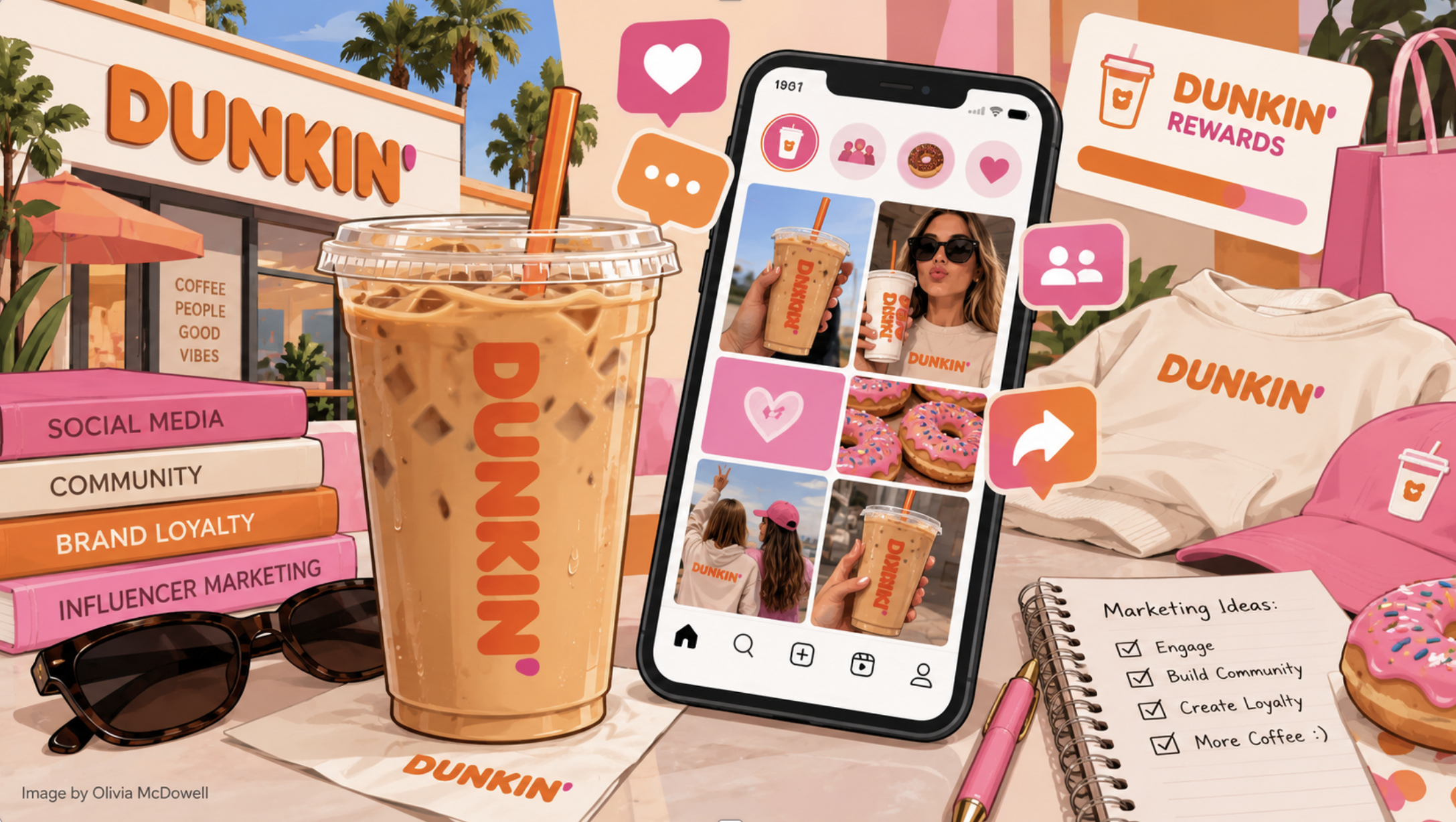
There is a difference between buying Dunkin every morning, and actually being loyal to Dunkin.
Someone could say that they stop every day on their way to work for their morning coffee, simply because there is a Dunkin on the way. But if a Starbucks were to open right next door and they immediately switched, were they ever really that loyal? It seems like they were loyal to convenience.
That’s what makes brand loyalty so interesting; repetitive purchases seem like loyalty, but can go deeper. For marketers, the goal should give consumers reasons to prefer and engage with a brand. Dunkin is a company that does this extremely well, especially with its success defined by social media.
Rewards Make You Come Back, Social Media Makes You Care
Dunkin has built a massive foundation through their reward system; every dollar spent converts into points, and points convert into free items once accumulated. App-users also receive exclusive officers and get access to limited promotions.
But the interesting part is what happens outside the apps, and on different ones.
Facebook contains groups dedicated to Dunkin; customers share codes, talk about their orders, and even update members on when new drops or promotional events are happening. Dunkin created the loyalty program, but their customers help market it.
Creating a community where people voluntarily talk about Dunkin, even when Dunkin isn’t active in the conversation, creates a huge success for the brand itself. Social media helps to host those interactions, making Dunkin feel like they are a part of something larger instead of where they occasionally buy coffee.
Give Your Brand Personality
That People Want to Follow
Dunkin also understands that social media doesn’t have to feel like targeted ads every single post.
They have developed a funny (and sometimes chaotic) online personality that gives people reasons to follow and engage with their content, even if buying a coffee isn’t at the top of their list.
Take their April Fools campaigns for example.
In 2025, Dunkin announced that they were giving away one million free coffees to reward members with the promo code ThisIsNotAJoke. In the following year, they continued the joke by giving away 1,000,001 coffees with the code StillNotAJoke.
Yes - giving away coffees encourages people to open the app and possibly purchase something else alongside their free coffee, but the strategy creates something larger.
Something to talk about.
FOMO.
What happens if you miss out on the free code? You’re encouraged to stay engaged with Dunkin as a whole. Redeemed the code? Well there could be more. Something that big keeps people wanting more. And it drives people to use their app.
Dunkin’s personality has become a part of its brand. Customers expect jokes and silly campaign posts that don’t take themselves too seriously. The recognizable identity helps create an emotional connection with their audience, helping to move consumers to genuine loyalty.
Meet Your Audience in the Communities They Already Love
Dunkin doesn’t stop with its own social accounts either; they’re constantly outreaching to influencers and celebrities to collaborate, tapping into other communities that exist online.
Take Chelsea Parke for example, CEO or Parke, this fashion brand has millions of women loyal to a mockneck brand with someone else’s last name on it. The Parke community is already extremely loyal; similar to Dunkin, TikTok is host to creators posting videos about new drops and mockneck colors.
Recently, Parke and Dunkin collaborated by releasing the Chelsea Park drink, as well as Dunkin branded mocknecks.
Dunkin continues to collaborate with influencers such as Alix Earle or Kylie Jenner, once again, tapping into communities to enhance loyalty.
If Alix Earle drinks Dunkin, why would I ever go to Starbucks?
Loyalty starts to become something bigger than earning points for a free drink.
Stop Measuring Loyalty by Purchases Alone
I think Dunkin provides an important lesson for social media marketers: loyalty is not defined by how often someone makes a purchase.
Loyalty is created by something much more.
Are customers talking about your brand without being asked?
Are they sharing content with friends?
Do people get excited around new product launches?
Are there inside jokes with your brand?
As Anthony Miyazaki explains in his discussion of brand loyalty, marketers can’t assume repeat purchases equal loyalty. Instead, the goal is to continuously move consumers closer to genuine brand loyalty by building stronger preferences and connections with the brand.
Dunkin Rewards gives customers reasons to buy their coffee, while social media gives them reasons to follow, engage, share, and feel like they are a part of the brand.
The Marketing Dumps
Don’t End Here.
There are more articles apart of this collective. The strategy behind the scroll helps you understand more to influencer marketing that meets the eye.
What looks effortless online usually has a strategy behind it. Keep digging into the marketing, psychology, and partnerships shaping what shows up on your feed.