

SOCIAL MEDIA STRATEGY
Everyone is Watching.
So What?
1 MIN READ
PUBLISHED SEPT 8, 2026
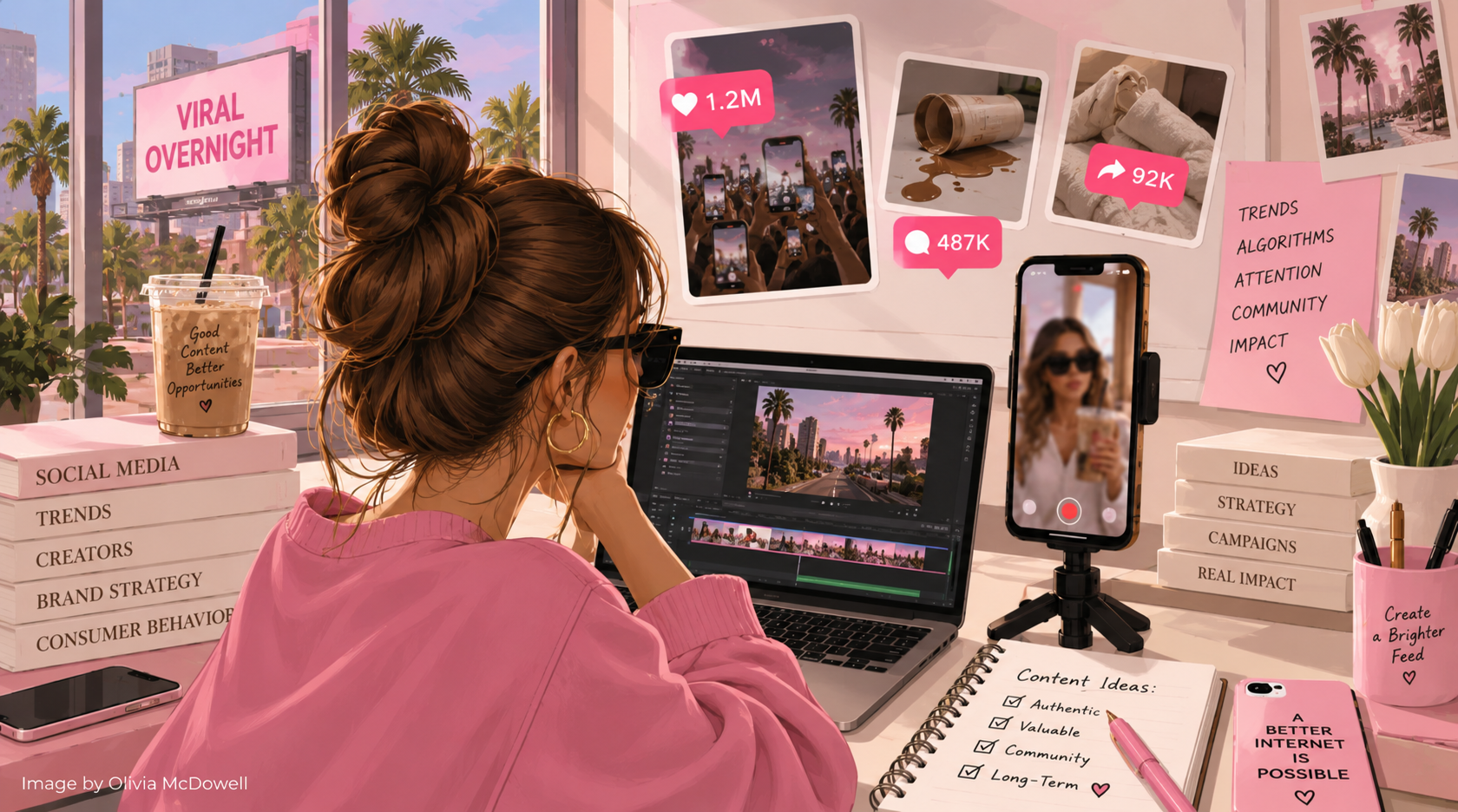
We live in an age where everything is at our fingertips: knowledge is one search query away, and millions of strangers are accessible through different social media platforms. The internet, as well as the way we market, has changed. Videos go viral for many reasons, and more often than not, for the worst of reasons.
A 2015 article published by Harvard Business Review details why some videos go viral, highlighting social motivation and emotional response. That was then, this is now. And in 10 years, things can change drastically.
Video content may have been a new concept over a decade ago, but the way audiences consume it has already evolved dramatically. YouTube pioneered long-form video, then came Vine, which shifted the focus to seven-second videos. After Vine shut down, TikTok quickly filled the gap and took short-form content to a new level. Since then, TikTok has transformed not only social media, but also how audiences consume and engage with video and product.
So, how do videos become viral?
Let’s look at some recent virality. Callaway Golf published a short advertisement promoting its new driver. The video was intended to be a parody, but its depiction of casual violence toward women sparked widespread outrage online. The video went viral, for all the wrong reasons.
But why?
Algorithms.
Algorithms push content that receives high levels of engagement, whether that engagement is positive or negative. People comment, share, create response videos, and participate in the conversation. In Callaway's case, viewers weren't just discussing the advertisement; some were sharing personal experiences with domestic violence, while others criticized the company for allowing the advertisement to be published. The controversy created conversation, and the conversation created engagement.
Sure, there are viral trends like “dot cakes” and “Fruit Love Island,” but those are examples of multiple creators contributing to a larger viral conversation. Today, a single video can reach millions of people overnight, but that doesn't necessarily mean the brand behind it has won.
My Advice to Marketers: Don't Chase Virality.
Marketers need to understand that not all attention is good attention. Controversy can make a video go viral even faster than creativity can. Marketers should chase virality through individual creators.
Take Lola Blankets, for example. The brand has invested heavily in partnerships with well-known creators, making its products appear repeatedly across social media. Rather than relying on one video to generate millions of views, Lola Blankets has created the perception that its products are everywhere.
And that matters. A $300 blanket might seem absurd to someone seeing it for the first time, but seeing the same product repeatedly from creators they already follow can make it feel familiar, desirable, and worth buying.
Virality isn’t always worth the chase. Investing in influencer marketing should be the strategy. Build familiarity, establish trust, and it will convert into sales.
In today’s social media, being everywhere consistently is more valuable than being viral and risking it all.

The Marketing Dumps
Don’t End Here.
There are more articles apart of this collective. The strategy behind the scroll helps you understand more to influencer marketing that meets the eye.
What looks effortless online usually has a strategy behind it. Keep digging into the marketing, psychology, and partnerships shaping what shows up on your feed.